
Inguinal Hernia Symptoms in Men and Women: Complete Guide
Inguinal hernias are among the most common surgical conditions worldwide. Approximately 27% of men and 3% of women will develop an inguinal hernia at some point in their lives.
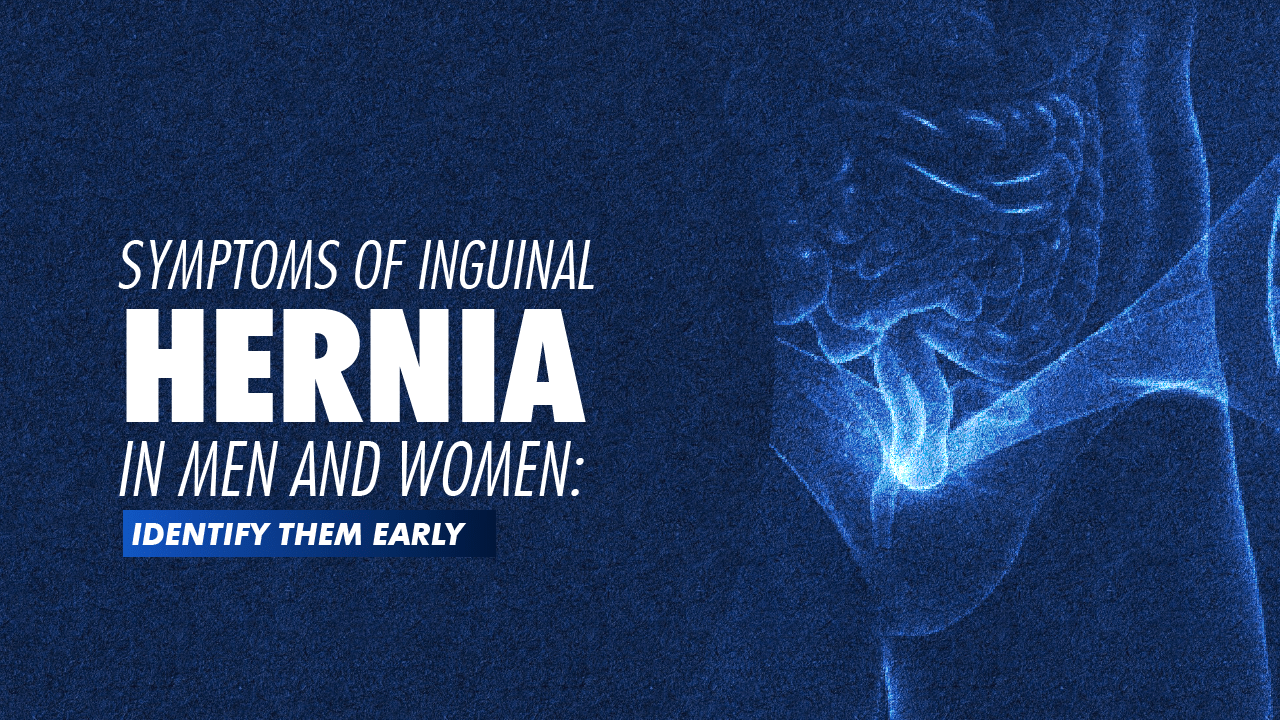
Inguinal hernias are among the most common surgical conditions worldwide. Approximately 27% of men and 3% of women will develop an inguinal hernia at some point in their lives. While the diagnosis is straightforward when symptoms are classic, many cases — especially in women — go undetected for years. This guide will help you recognize the signs in both men and women, understand when surgery is needed, and explore your options including affordable repair in Guadalajara, Mexico.
What is an inguinal hernia?
An inguinal hernia occurs when abdominal tissue (usually intestine or fat) pushes
through a weak spot in the lower abdominal wall — specifically through the inguinal canal in the groin area.
Symptoms in men
Classic signs
- Visible bulge in the groin or scrotum (especially when standing, coughing, or straining).
- Bulge disappears when lying down or with gentle pressure.
- Heaviness or dragging sensation in the groin.
- Discomfort or pain when lifting, bending, or coughing.
- Burning, aching, or gurgling sensation at the bulge site.
- Swelling around the testicles if the hernia extends.
When symptoms worsen
- Pain at the end of the day after activity.
- Discomfort with sexual activity.
- Increasing size of the bulge over time.
- Inability to push the bulge back in (incarceration).
Symptoms in women
Inguinal hernias in women are frequently missed or misdiagnosed because they present
differently:
Common (but often overlooked) symptoms
- Deep groin or pelvic pain without visible bulge.
- Pain worsening with activity, standing, or menstruation.
- Burning or pulling sensation in lower abdomen or groin.
- Pain during sexual intercourse.
- Persistent groin discomfort misattributed to gynecological issues.
- Pain radiating down the inner thigh.
Why diagnosis is delayed in women
- Hernias in women are often smaller and deeper.
- Bulge may not be visible externally.
- Symptoms mimic gynecological conditions.
- Many physicians don’t routinely examine for hernias in women.
- Pelvic ultrasound may miss small inguinal hernias.
If you’re a woman with persistent unexplained groin pain, ask specifically about
hernia evaluation.
Emergency symptoms — go to ER immediately
These signs indicate possible incarceration or strangulation (intestinal blood supply cut off):
- Sudden severe pain at the hernia site.
- Bulge that won’t push back in and is painful.
- Skin redness or discoloration over the bulge.
- Nausea, vomiting, or inability to pass gas/stool.
- Fever with abdominal pain.
Strangulated hernias are surgical emergencies — delay can be life-threatening.
Risk factors
Common to both sexes
- Family history.
- Chronic coughing (smoking, COPD).
- Chronic constipation.
- Heavy lifting (occupational or recreational).
- Obesity.
- Aging (weakening of tissue).
Specific to men
- Premature birth.
- Prior abdominal surgery.
Specific to women
- Multiple pregnancies.
- Postpartum.
- Connective tissue disorders.
Types of inguinal hernias
Indirect inguinal hernia
- Most common type.
- Follows the natural pathway of the inguinal canal.
- More common in men.
- Often present from birth (congenital weakness).
Direct inguinal hernia
- Pushes through the abdominal wall directly.
- More common in older adults.
- Usually acquired (not congenital).
- Less likely to incarcerate.
Femoral hernia
- Technically separate from inguinal but anatomically nearby.
- More common in women (especially older).
- Higher risk of strangulation — usually requires prompt surgery.
Diagnosis
Diagnosis typically involves:
- Physical examination — gold standard, often diagnostic alone.
- Examination while standing and Valsalva (cough/strain).
- Ultrasound — useful for occult or small hernias, especially in women.
- CT scan or MRI — for complex cases or chronic groin pain.
When you need surgery
Surgery is recommended when:
- The hernia is symptomatic (causing pain or discomfort).
- The hernia is enlarging.
- You have risk factors for strangulation (femoral hernia, history of incarceration).
- The hernia interferes with daily activities or work.
Watchful waiting may be appropriate for:
- Asymptomatic small hernias in older men.
- Patients with very high surgical risk.
However, most hernias eventually require surgery — delaying often makes the eventual
repair more complex.
Treatment: surgical options
Open hernia repair
- Single 4-6 cm incision in the groin.
- Mesh placement to reinforce the wall.
- Local or general anesthesia.
- Same-day discharge usually.
- Recovery: 2-4 weeks.
Laparoscopic hernia repair (TAPP or TEP)
- Three small incisions.
- Mesh placement from inside the abdomen.
- General anesthesia.
- Same-day discharge.
- Recovery: 1-3 weeks (faster).
- Best option for bilateral hernias (both sides).
- Best option for recurrent hernias.
- Less chronic pain risk.
Robotic hernia repair
- Similar to laparoscopic but with robotic assistance.
- Excellent visualization for complex cases.
Why Guadalajara for hernia surgery
Hernia repair is one of the most common surgeries sought through medical tourism. In
Guadalajara, you’ll find:
| Factor | U.S. | Guadalajara |
|---|---|---|
| Laparoscopic repair cost | $7,000 - $15,000+ | $2,800 - $5,500 USD |
| Bilateral repair cost | $10,000 - $20,000+ | $3,500 - $6,500 USD |
| Wait time | Weeks | Days |
| Mesh quality | Same options | Same options |
| Hospital stay | Same-day | Same-day or 1 night |
Standard of care
Quality clinics in Guadalajara use the same FDA-approved mesh products (Bard, Ethicon, Atrium) as U.S. centers. Surgical technique is often identical.
What to expect during medical tourism
Pre-trip
- Virtual consultation with surgeon.
- Send imaging if available.
- Receive personalized quote and surgical plan.
- Get instructions for travel.
In Guadalajara
- Day 1: Arrival, in-person consultation, pre-op labs.
- Day 2: Surgery (laparoscopic typically 60-90 minutes).
- Day 2 evening or Day 3: Discharge from hospital.
- Days 3-6: Recovery at recommended hotel.
- Day 7: Post-op follow-up; cleared for travel.
- Day 7-8: Return home.
Total trip duration: 7-10 days.
Recovery timeline
| Time | Activity level |
|---|---|
| Days 1-3 | Rest, walking allowed |
| Time | Activity level |
|---|---|
| Days 4-7 | Light activities, no lifting >10 lbs |
| Week 2 | Return to desk work |
| Week 3 | Light exercise resumes |
| Week 4-6 | Full activity, including heavy lifting |
| Week 6+ | Full athletic activity |
Symptoms usually worsen. Risk of incarceration/strangulation increases (a surgical
emergency). Eventual repair becomes more complex.
Will the mesh cause problems?
Modern mesh is well-tolerated. Less than 5% of patients experience long-term mesh-related issues. Many surgeons now offer absorbable mesh options.
Can I exercise after hernia repair?
Yes, gradually. Most patients return to gym workouts at 4-6 weeks with surgeon clearance.
Is laparoscopic repair safe for women?
Yes — and often preferred because it allows examination of both sides during the same surgery (women have a higher chance of bilateral hernias).
How long should I stay in Mexico after hernia surgery?
Plan for 7-10 days to ensure adequate recovery and one follow-up before flying home.
Will my hernia come back?
Recurrence rates with proper mesh repair are under 2%. Choosing an experienced surgeon and following post-op restrictions are key.
Is this covered by U.S. insurance?
Elective international surgery is typically not covered. Some patients use HSA/FSA funds. Medical records are provided for any reimbursement claims.
Can I have both sides repaired at once?
Yes. Laparoscopic technique allows bilateral repair through the same incisions — often saving money and recovery time.
Final thoughts
Inguinal hernias are extremely treatable, and modern laparoscopic repair allows fast recovery with excellent long-term results. Whether you’re male or female, with classic symptoms or subtle ones, don’t ignore persistent groin pain or discomfort. If cost or wait times have prevented you from seeking care, medical tourism in Guadalajara offers a high-quality, affordable solution.
Suspect a hernia? Get expert evaluation in Guadalajara. Dr. Gerardo Rodríguez Navarro
offers laparoscopic and open hernia repair with bilingual care, transparent all-inclusive pricing, and expert handling of complex cases.
Frequently asked questions
Can a hernia heal on its own?
No. Hernias do not heal without surgery in adults. They typically enlarge over time.
Related articles
Early Symptoms of Acute Appendicitis: When to Seek Emergency Care
Acute appendicitis is one of the most common surgical emergencies worldwide, affecting roughly 1 in 20 people during their lifetime.
Read ApendicitisLaparoscopic Appendectomy Recovery: Day-by-Day Timeline
Modern laparoscopic appendectomy has transformed what was once a major operation into a procedure with remarkably fast recovery.
Read ApendicitisHow Much Does Appendix Surgery Cost in Guadalajara, Mexico? (2026
If you’re researching appendix surgery costs — whether because you’re uninsured, underinsured, or simply comparing options — you’ve likely noticed massive price differences between countries.
Read