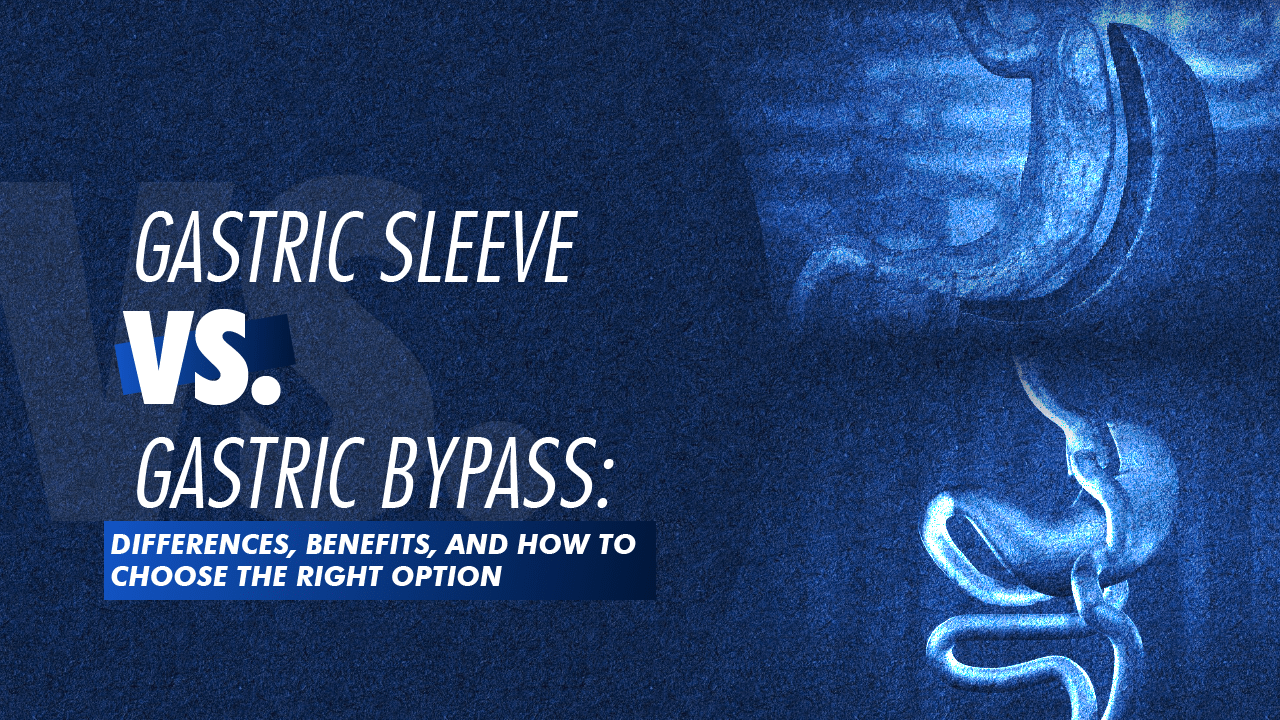
Gastric Sleeve vs. Gastric Bypass: Complete Comparison Guide
probably the two options you’ve been told to consider. Both are safe, effective, and performed laparoscopically — but they’re not interchangeable.
These are the two most common bariatric procedures performed worldwide, and
probably the two options you’ve been told to consider. Both are safe, effective, and performed laparoscopically — but they’re not interchangeable. Each has an ideal patient profile. This detailed comparison will help you understand which procedure may be right for you. As a board-certified surgeon in Guadalajara who performs both procedures, I’ve seen excellent outcomes with each — when the right patient gets the right surgery.
What is gastric sleeve surgery?
Gastric sleeve gastrectomy (sleeve) involves removing approximately 75-80% of the
stomach, leaving a narrow tube or “sleeve” shape. How it works: - Restrictive: dramatically reduces stomach capacity. - Hormonal: removes the fundus (where ghrelin is produced), reducing hunger. - Does NOT alter intestines or nutrient absorption. Result: Eat less, feel full faster, less hunger.
What is gastric bypass?
Roux-en-Y gastric bypass creates a small stomach pouch (size of an egg) and connects it directly to a lower portion of the small intestine, bypassing part of the stomach and duodenum. How it works: - Restrictive: reduces functional stomach size. - Malabsorptive: bypassing intestine reduces calorie absorption. - Hormonal: profound changes in GLP-1, PYY, and ghrelin that improve diabetes and reduce hunger. Result: Eat less, absorb less, dramatic metabolic improvements.
Quick comparison table
Feature Gastric Sleeve Gastric Bypass Surgery time 60-90 min 90-150 min Hospital stay 1-2 nights 2-3 nights Excess weight loss at 1 60-70% 70-80% year Long-term (10 yr) Good Better
Feature Gastric Sleeve Gastric Bypass weight maintenance Reversibility Not reversible Partially reversible Vitamin deficiency risk Low to moderate Moderate to high Diabetes remission Good (60-70%) Excellent (80-85%) Reflux effect May worsen Excellent (improves) Dumping syndrome Rare Possible with sugar Anastomotic None Possible complications Suitable for high BMI Yes Better (>50) Suitable for sweet/carb Yes Best (dumping deters) eaters
Weight loss expectations
Gastric sleeve
- 60-70% of excess weight lost in first year.
- Continues some loss through 18-24 months.
- Some weight regain possible (5-15% at 5+ years).
Gastric bypass
- 70-80% of excess weight lost in first year.
- Better long-term maintenance.
- Less weight regain over time.
Example
A person with 100 lbs excess weight (BMI ~50) might lose: - Sleeve: 60-70 lbs in first year, possibly 50-60 lbs maintained at 5 years. - Bypass: 70-80 lbs in first year, possibly 65-75 lbs maintained at 5 years.
Which is better for diabetes?
Gastric bypass is superior for type 2 diabetes:
- 80-85% remission with bypass.
- 60-65% remission with sleeve.
- Faster glucose normalization with bypass.
- Better resolution of insulin requirements.
The intestinal hormone changes from bypass appear to be uniquely powerful for diabetes management.
For diabetic patients, especially those on insulin or with longer disease duration, bypass is often the preferred choice.
Which is better for reflux?
This is a critical decision point:
Sleeve and reflux
- 20-30% of sleeve patients develop new or worsened GERD.
- Sleeve can also create or worsen hiatal hernia.
- Some patients need PPIs after sleeve.
- Severe reflux post-sleeve sometimes requires conversion to bypass.
Bypass and reflux
- Bypass is excellent for reflux.
- Often called “gold standard” for obese patients with GERD.
- Significantly improves or eliminates reflux symptoms.
- Eliminates need for PPIs in most cases.
If you have significant GERD or hiatal hernia, bypass is usually preferred.
Risk comparison
Both procedures are safe in experienced hands, but profiles differ:
Gastric sleeve risks
- Staple line leak (1-2%).
- Bleeding.
- New-onset reflux.
- Stenosis (narrowing).
- Less complex than bypass.
Gastric bypass risks
- Anastomotic leak (1-2%).
- Internal hernia (long-term, 1-3%).
- Marginal ulcer (3-5%).
- Strict supplementation required.
- Dumping syndrome with high-sugar meals (can be advantageous as deterrent).
- More complex anatomy.
Vitamin and nutrient considerations
Both require lifelong supplementation, but levels differ:
After sleeve
- Multivitamin.
- B12 (often).
- Vitamin D and calcium.
- Iron (especially women).
- Generally well-absorbed.
After bypass
- Multivitamin (bariatric-specific).
- B12 (sublingual or injection).
- Iron (often higher doses).
- Calcium citrate (not carbonate).
- Vitamin D (often high dose).
- More strict monitoring needed.
Bypass requires more dedication to supplementation because of the malabsorptive
component.
Dumping syndrome explained
Some bypass patients experience “dumping” when eating high-sugar foods: - Nausea, sweating, palpitations. - Diarrhea, abdominal pain. - Lightheadedness. - Occurs 15-30 minutes after sugary meal. This is often seen as a benefit — it teaches patients to avoid high-sugar foods, reinforcing healthy eating. Sleeve patients rarely experience dumping.
Cost comparison (Guadalajara, Mexico)
| Procedure | U.S. (cash) | Guadalajara |
|---|---|---|
| Gastric sleeve | $20,000 - $35,000 | $5,500 - $8,500 |
| Gastric bypass | $25,000 - $45,000 | $7,500 - $11,000 |
| Difference | $5,000 - $10,000 | $2,000 - $2,500 |
Bypass costs slightly more due to longer surgery and more complex equipment.
Recovery comparison
Gastric sleeve recovery
- Hospital: 1-2 nights.
- Diet stages: same protein-focused progression.
- Return to work: 1-2 weeks.
- Full activity: 4-6 weeks.
Gastric bypass recovery
- Hospital: 2-3 nights.
- Diet stages: similar but stricter sugar avoidance.
- Return to work: 1-3 weeks.
- Full activity: 4-6 weeks.
Recovery experience is broadly similar. Most patients return to normal activities at the same pace.
Long-term lifestyle differences
After sleeve
- Lifelong smaller portions.
- Some food restrictions.
- Supplementation.
- Annual follow-up.
After bypass
- Smaller portions (more restrictive than sleeve early).
- Strict avoidance of high-sugar foods.
- More frequent meals.
- More rigorous supplementation.
- Lifelong vitamin monitoring.
Choosing: typical patient profiles
Sleeve may be ideal for you if:
- BMI 35-50.
- No major diabetes (or recent onset, well-controlled).
- No significant reflux.
- Want simpler surgical procedure.
- Prefer to maintain normal intestinal anatomy.
- Have inflammatory bowel disease (bypass not recommended).
- Concerned about long-term vitamin requirements.
Bypass may be ideal for you if:
- BMI > 45.
- Poorly controlled type 2 diabetes.
- Significant GERD or hiatal hernia.
- “Sweet eater” wanting strong deterrent.
- Want most powerful long-term weight loss.
- Previous failed sleeve.
Some scenarios are clearly one or the other
Choose bypass if: - Severe GERD with hiatal hernia. - Diabetes on insulin or multiple
medications.
Choose sleeve if: - Inflammatory bowel disease. - High anesthesia/surgical risk wanting shorter procedure. - Concerned about complex anatomy changes.
Special situations
Revision surgery
- Failed sleeve → can convert to bypass.
- Failed bypass → can revise but technically complex.
- Reversal: bypass partially reversible; sleeve not reversible.
Adolescents
- Sleeve often preferred (less complex, maintains normal anatomy).
- Allows future revision if needed.
Older patients
- Both are options.
- Sleeve sometimes preferred for shorter surgery time.
- Decision based on comorbidities.
Lower BMI (30-35) with diabetes
- Bypass often preferred for metabolic effects.
- Or newer mini-bypass options.
Why Guadalajara for bariatric surgery
Both procedures are performed extensively in Guadalajara at world-class facilities:
- High-volume centers (often >300 cases/year).
- Board-certified bariatric surgeons.
- Modern equipment (Echelon staplers, advanced energy devices).
- JCI-accredited hospitals.
- Comprehensive packages including nutritionist, psychologist support.
- Bilingual care.
Medical tourism timeline
10-14 days total: - Days 1-3: Arrival, evaluation, pre-op workup. - Days 4-5: Surgery and hospital stay. - Days 6-10: Hotel recovery, post-op visit. - Days 11-14: Return home.
Long-term success factors
Regardless of which procedure you choose, success depends on:
- Choosing experienced surgeon.
- Following dietary guidelines strictly.
- Lifelong supplementation.
- Regular follow-up.
- Physical activity.
- Mental health support.
- Realistic expectations.
Final thoughts
There is no universally “better” bariatric surgery — there is the better surgery for you. That decision should be made by: 1. Comprehensive medical evaluation. 2. Honest discussion of your eating habits and lifestyle. 3. Consideration of your medical conditions. 4. Long-term thinking about commitment level. 5. Expert surgical guidance.
Both gastric sleeve and gastric bypass can transform lives when chosen and performed
correctly. The right choice depends on your unique medical, lifestyle, and personal factors.
Frequently asked questions
Which surgery hurts more?
Pain is similar for both, controlled with medication. Bypass may have slightly more discomfort initially but resolves at similar rate.
Which is easier to live with?
Sleeve has fewer dietary restrictions and lower supplementation requirements. Most patients find both very livable after adjustment.
Can I drink alcohol after either?
Both procedures cause faster alcohol absorption. Most surgeons recommend avoiding alcohol for 6-12 months, then moderate consumption only.
Will I have loose skin?
Probable with either, especially with significant weight loss. Body contouring can be considered 12-18 months later.
Which has better long-term results at 10 years?
Studies show bypass maintains weight loss better at 10 years. Sleeve has slightly more weight regain over time, but difference is modest in most patients.
Can either procedure fail?
Both can have suboptimal outcomes (10-20%), usually related to lifestyle non-compliance rather than procedure failure. Revision options exist for both.
Which is more popular?
Globally, sleeve has become more common due to simpler technique. Bypass remains preferred for specific indications (diabetes, reflux).
Can I have either as outpatient?
Most centers keep patients overnight for safety. Some U.S. centers offer outpatient sleeve, but overnight stay is safer.
Will my insurance cover either in Mexico?
Usually not for elective surgery. Many patients use savings or HSA/FSA funds. Some report partial reimbursement after submitting records.
How do I choose if I can’t decide?
A comprehensive evaluation including endoscopy, motility studies, and detailed discussion with surgeon usually clarifies the choice. Don’t feel pressured into either if uncertain.
Related articles
Early Symptoms of Acute Appendicitis: When to Seek Emergency Care
Acute appendicitis is one of the most common surgical emergencies worldwide, affecting roughly 1 in 20 people during their lifetime.
Read ApendicitisLaparoscopic Appendectomy Recovery: Day-by-Day Timeline
Modern laparoscopic appendectomy has transformed what was once a major operation into a procedure with remarkably fast recovery.
Read ApendicitisHow Much Does Appendix Surgery Cost in Guadalajara, Mexico? (2026
If you’re researching appendix surgery costs — whether because you’re uninsured, underinsured, or simply comparing options — you’ve likely noticed massive price differences between countries.
Read